‘Don’t worry its not to look like a dog or like you’re barfing a rainbow’
As seen in the video above, Snapchat Dysmorphia is a body dysmorphia syndrome, where individuals, especially teenagers want or have undergone cosmetic surgeries to micro-optimize themselves to resemble their digital filtered selves, as they are unsatisfied with their appearance. This is usually associated with Snapchat filters, Facetune (a doctoring app) and Instagram. The most popular surgeries include reducing nose size, lifting cheek bones and plumping lips. By using an anthropological lens, I will briefly explore some of the critical underpinnings of this new trend, such as new forms of normalized bodies, agency (or lack thereof) and gender.
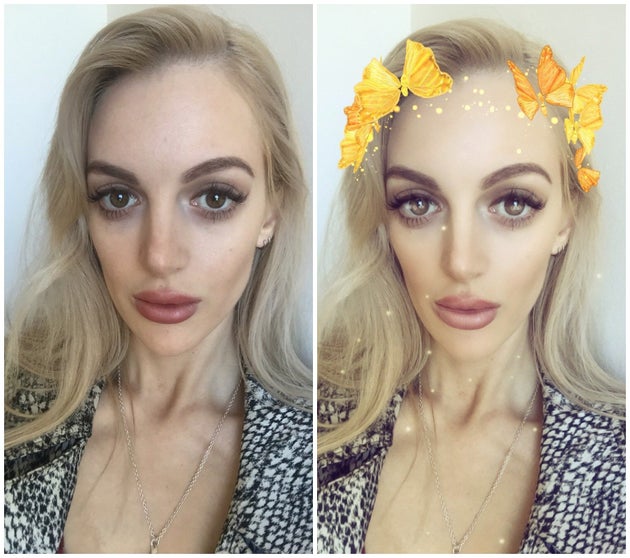
Originally, cosmetic surgery was intended to correct physical deformities due to war injuries. However, it has since become an easily accessible and somewhat socially acceptable form of exterior bodily enhancement which is not medically necessary. Kathy Davis argues that these self-enhancing acts are forms of active agency and empowering, in particular for western European women (Davis, 1995). On the other hand, there exists a lot of literature which would contest this notion. For example, with Snapchat Dysmorphia, an overarching, almost inescapable force is shaping beauty ideals and normalizing digital forms of enhancement, which in turn become internalized by women from a young age. So-called ‘Millenials’ are often called self-obsessed, but current forms of being in the world and being human are largely centered on the self. Having the power to mold themselves through digital and surgical means perhaps creates a moral responsibility on individuals to achieve this ‘normal’ body. Therefore, cosmetic surgery is not only a form of body enhancement but a tool for normalizing bodies.

Furthermore, as applications such as Snapchat, Instagram and Facetune are internationally available, these normalized beauty standards can be spread rapidly, further projecting ‘westernized’ predominantly white appearances. Finally, below I have included how these digital enhancements can have detrimental effects to self-esteem to those who ‘naturally’ do not share these white features in the US. In conclusion, although the surgical procedures under the ‘Snapchat Dysmphoria’ umbrella are without a doubt influenced by the ability to consume and reproduce digital forms of normalized beauty, but also reflect larger ‘westernized’ women’s beauty ideals.
“it’s almost like you’re not human”
References:
b/60 (2018). People Seeking Plastic Surgery to Look Like Snapchat Filters. Available at: https://www.youtube.com/watch?v=ymS32G-LvxY [Accessed 8 Feb. 2019].
Buzfeed (2019). Filter #1. [image] Available at: https://www.buzzfeednews.com/article/krishrach/people-think-snapchats-beauty-filters-are-making-them-look-w#.guL0GOkKyx [Accessed 30 Jan. 2019].
Davis, K. (1995). Reshaping the Female Body: the Dilemma of Cosmetic Surgery.. 1st ed. New York: Routledge.
Hogle, L. (2005). ENHANCEMENT TECHNOLOGIES AND THE BODY. Annual Review of Anthropology, 34(1), pp.695-716.
Huffington Post (2019). ROSY CHERRINGTON/SNAPCHAT. [image] Available at: https://www.huffingtonpost.co.uk/entry/social-media-influencing-plastic-surgery_uk_57bc5803e4b0f78b2b4b9c15?guccounter=1&guce_referrer_us=aHR0cHM6Ly9kdWNrZHVja2dvLmNvbS8&guce_referrer_cs=0knATDbwvTPz1lCj6M26Wg [Accessed 31 Jan. 2019].
Randolph C. Robinson, F. (2019). The History of Cosmetic Surgery – How It All Began. [online] Robinson Cosmetic Surgery, LLC: The Leader in Denver Cosmetic Surgery. Available at: https://www.robinsoncosmeticsurgery.com/info/history-of-cosmetic-surgery/ [Accessed 30 Jan. 2019].
‘Snapchat Dysmorphia’: Why Teens Are Turning To Plastic Surgery | TODAY. (2019). Youtube: https://www.youtube.com/watch?v=8yIdCKGcCgg.

 Jasmin R.
One thought on “Snapchat Dysmorphia”